

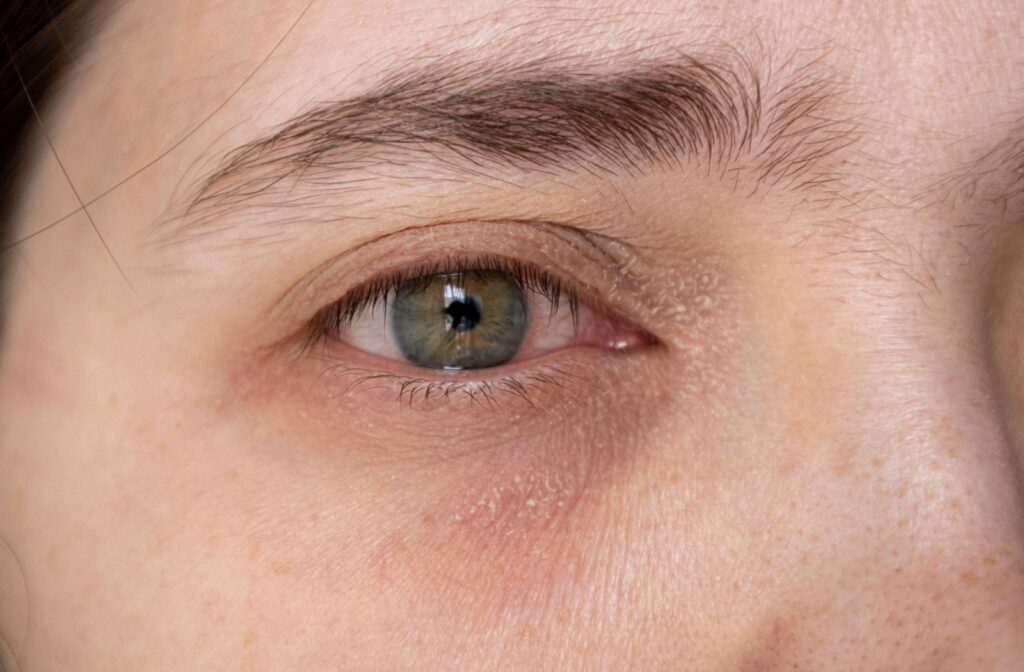
Your eyes are red, irritated, and uncomfortable, and you just want them to feel normal again. Maybe you’ve been reaching for eye drops, avoiding screens, or blaming spring pollen for the problem. But before you can find real relief, our team at First Optometry knows that you need to know what you’re actually dealing with. Don’t worry..this confusion is more common than you might think!
Dry eye disease and eye allergies share many symptoms, but they have different causes and therefore respond to different treatments, which means getting the right diagnosis matters. If you’re unsure where to start, our team in St. Thomas would love to help.
The Key Difference Between Dry Eye and Allergies
Dry eye disease can happen when your tear film isn’t doing its job properly. It usually comes down to 2 problems: either your eyes aren’t producing enough tears, or the tears you do produce evaporate too quickly because the tears present are unstable and of poor quality.
Eye allergies, on the other hand, are a reaction to something in your environment, like pollen, pet dander, or dust. Your immune system sees these harmless things as threats and begins to treat them like an invader. The tricky part? Both conditions can happen at the same time, which makes it that much easier to confuse them.
What Dry Eye Actually Feels Like
Common Dry Eye Symptoms
Dry eye tends to have a slightly different feeling than allergies. Though everyone experiences the symptoms a little differently, if any of these sound familiar, dry eye may be the culprit:
- A burning, stinging, or gritty sensation, like something is in your eye.
- Blurry vision that comes and goes.
- Watery eyes that seem to contradict the problem, which can be your eye’s response to dryness.
What Leads to Dry Eye
Modern behaviors are among the most significant contributors to the development and management of dry eye disease:
- Digital Device Use: Long hours in front of a screen often cause dry eyes. When you’re focused on a task, whether it’s a work project or helping with homework, you tend to blink less often, which causes tears to evaporate faster.
- Diet and Sleep: Diets high in processed foods and low in omega-3 fatty acids can worsen systemic inflammation and dry eye symptoms. Poor sleep quality is also linked to increased dry eye disease severity.
- Medications and Cosmetics: Certain systemic medications and cosmetics can exacerbate or create dry eye symptoms.
Environmental factors such as air conditioning, indoor heating, or a windy day, can also contribute to dry eyes.
For women over 40, hormonal changes can be a common factor in dry eye development. Hormone shifts can affect how your tear film functions, which is why some women first notice symptoms around perimenopause or menopause.
Dry eye disease is more common in elderly patients, as several underlying causes and contributing factors for the condition are directly associated with the aging process.
What Eye Allergies Feel Like
Common Allergy Symptoms
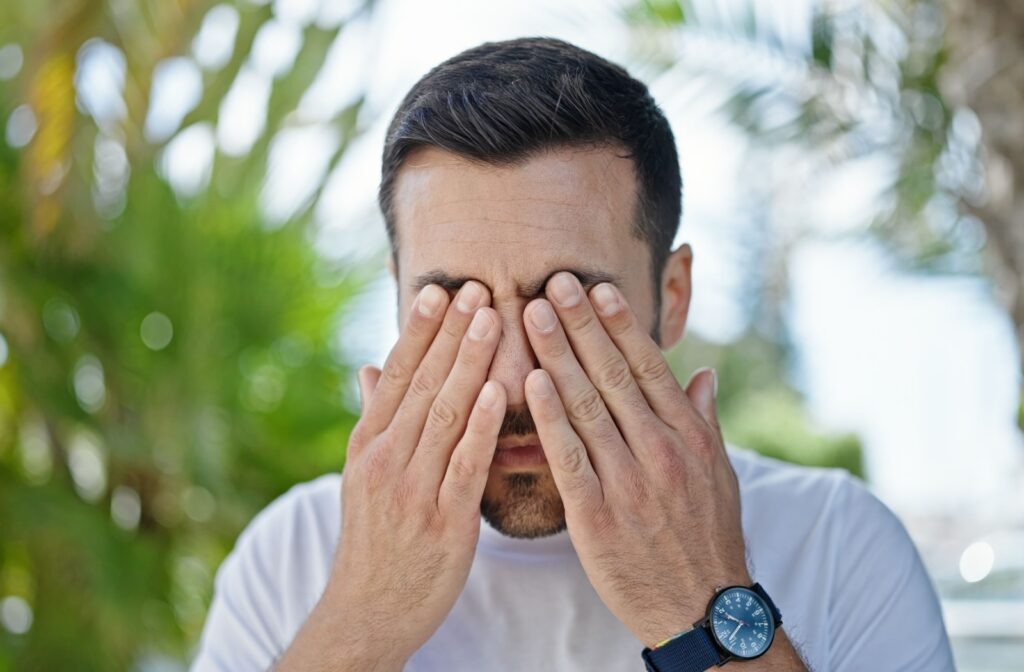
One of the most clear signs of ocular allergies is an intense itchy sensation. We’re not talking about mild discomfort: It’s the kind of itch that makes it hard to leave your eyes alone. Other symptoms to watch for include:
- Swollen or puffy eyelids.
- Watery discharge that leaves your eyes looking red and irritated.
- Sneezing or a runny nose alongside eye symptoms.
Common Allergy Factors
Allergies often follow patterns. Maybe they flare up during certain seasons or in specific environments. Outdoor factors like pollen, grass, and mould tend to peak in spring and fall, but indoor allergens like dust mites, pet dander, and smoke can keep symptoms going year-round.
If your eyes feel worse after spending time outside from February to October (which is pollen season here in St. Thomas), allergies are worth considering.
How to Tell Which One You Have
The Itch Factor
Itchy eyes are the clearest clue. If your eyes itch intensely and constantly, that’s a strong signal pointing toward allergies. If the discomfort feels more like burning, dryness, or grittiness (without much itching), dry eye is more likely the issue.
Other Clues Worth Noticing
Allergy symptoms are rarely localized to the eyes alone. If you’re also sneezing, congested, or dealing with a runny nose or an itchy throat, your eyes are likely reacting to the same allergen. Dry eye, on the other hand, is typically isolated to the eyes themselves.
Pay attention to timing, too. If your symptoms flare up every spring but clear up by summer, allergies are a reasonable fit. If the discomfort lingers through every season (and worsens after screen time or in dry indoor air), dry eye may be the more likely cause.
When to See an Eye Doctor in St. Thomas
Guessing at the cause of eye discomfort can lead to months of ineffective treatment. An eye exam with one of our St. Thomas optometrists can help identify exactly what’s going on, whether that’s dry eye disease, allergies, or both. A dry eye assessment can look at the quality and quantity of your tear film, so we can recommend the right approach.
Book Your Assessment
Ready to get some answers? You can start by taking our dry eye questionnaire. If you think you might have dry eye, allergies, or both, we’d love to help you find relief. Book an eye exam with our team at First Optometry in St. Thomas and take the first step toward eyes that finally feel comfortable again.
