


Key Takeaways
- Warm compresses can soften and loosen the oil in the glands within your eyelids, which can help improve tear quality.
- Steady warmth for ten minutes is more effective than a quick, hot cloth that cools in seconds.
- A gentle massage after the warmth can help move oil and improve tear quality.
- Home care helps mild symptoms, though some cases need a closer look from an eye doctor.
- An assessment can point you toward the care that fits your symptoms.
You blink, and for a moment your eyes feel fine. Minutes later, that dry, sandy feeling creeps back. You may have heard about using a warm compress for relief, but you may not know why it works or how to use one properly. At First Optometry, we can explain why a warm compress can help with dry eye, how to use one properly, and when to seek professional care.
Warm compresses can help many people with dry eye, especially when the discomfort comes from blocked or clogged oil glands that line your eyelids.
What Are the Meibomian Glands?
Your eyelids are lined by small oil glands called meibomian glands. They produce the oily layer of your tears, which protects the surface of the eye, and helps keep your tear film from evaporating too quickly. When these glands become clogged with hardened oil, the tear film becomes dysfunctional and unstable, leading to that dry, gritty feeling.
That is why a warm compress can be helpful. By placing it over your eyes, it can warm those hardened oils and help improve your tear quality.
How to Use a Warm Compress the Right Way
Temperature and time matter more than most people expect. A cloth dipped in hot water feels nice for a moment, but it may cool before it does much good.
Try these tips for better results:
- Use a compress that holds heat for longer, such as a microwavable or USB plug-in eye mask.
- Keep the warmth comfortable and never hot enough to sting your skin.
- Rest it over closed eyes and relax, giving the oil time to soften.
- After a few minutes, you may gently massage your eyelids through the compress toward the lashes to help the oil move.
- Repeat 1 to 2 times a day for a few weeks and see how your eyes respond.
Like any habit, consistency matters. A single session may feel pleasant, but a daily habit gives your meibomian glands a better chance to clear.
When a Warm Compress Isn’t Enough
Sometimes warming the glands at home only takes you so far. If your eyes still burn, water, or feel gritty after a few weeks of steady home care, something deeper may be going on.
If you notice any of the following signs, it may be time to seek professional dry eye care:
- Redness or irritation that lingers through the day.
- Blurred vision that clears with blinking.
- A gritty or scratchy feeling that keeps coming back.
- Eyes that water a lot but still feel dry.
- You have trouble wearing contact lenses as long as you used to.
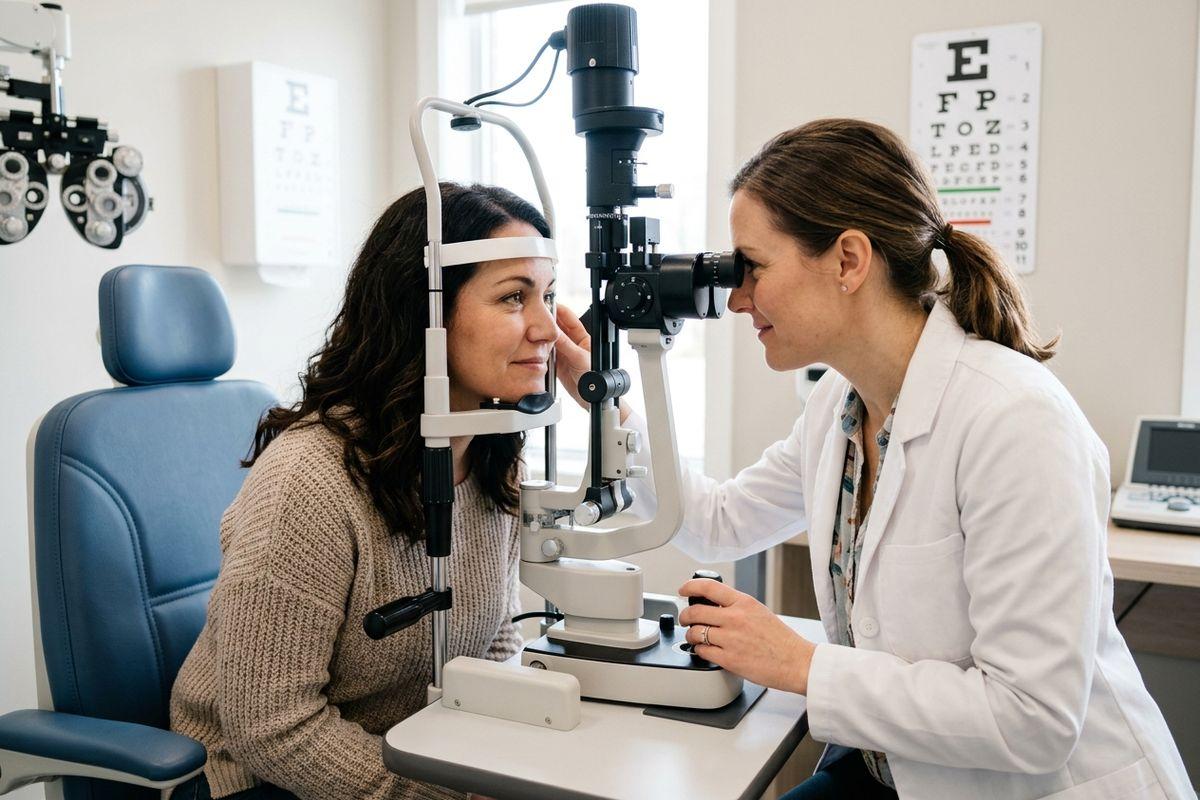
These clues can help an optometrist in St. Thomas at First Optometry evaluate your tear film, eyelids, and ocular surface, and come up with a personalized plan to suit your needs.
How an Eye Doctor in St. Thomas Can Help
A dry eye assessment goes beyond a quick look. Our team can measure how quickly your tears break up, check the function of your oil glands, evaluate your eyelids, and review habits that may be worsening your symptoms. From there, care might include in-office treatments that clear blocked glands more thoroughly than home warmth alone.
If you live in or near St. Thomas, Elgin County, or Port Stanley, an eye exam at First Optometry gives you a clear starting point. You get answers about your own eyes instead of guessing which product might help.
Book Your Visit
A warm compress can be a simple, comforting part of your daily routine, and for many people, it can bring real relief. But if that’s not enough, our team at First Optometry can help you find the cause of the dryness and build a plan around it. Book a dry eye assessment today for existing patients, or a full comprehensive eye examination to start for new patients, and take the first step toward clearer, more comfortable vision.
