



Key Takeaways
- Most eye exams take between 30 and 60 minutes, depending on your needs.
- Children’s exams typically run 15 to 45 minutes, while adult exams can take up to 55 minutes.
- Pupil dilation can add 30 minutes or more to your appointment.
- Bringing your health history and a list of symptoms helps your visit go smoothly.
- Children and adults 65+ benefit from a yearly eye exam, while adults 19 to 64 should have one at least every 2 years.
You’ve got a packed schedule. Between work, the kids, and everything else on your plate, it’s fair to wonder how much time to set aside for an eye exam before you book one. First Optometry makes it easy to know what to expect so you can plan your day without any surprises. Whether you’re booking for yourself or the whole family, a quick look at what’s involved can help you feel ready before you even walk through the door. If you haven’t already, taking a moment to complete the new patient forms ahead of time is a simple way to save a few minutes on the day of your visit.
Most eye exams take between 30 and 60 minutes, though your specific needs may make your appointment shorter or a little longer.
How Long a Typical Eye Exam Takes
For most people, an eye exam fits comfortably into a lunch break or an afternoon slot. Children’s appointments generally run 15 to 45 minutes. Adult appointments tend to fall between 25 and 55 minutes. That range exists because no two visits are exactly the same. Your age, health history, and what the optometrist finds along the way all play a role.
What Affects the Length of Your Exam
Your Health History and Needs
If you’re a new patient at First Optometry, our team may spend a little extra time getting to know your health background. That information shapes the entire exam, so it’s worth the few extra minutes. Certain health conditions, like diabetes, may mean your optometrist takes a closer look at parts of your eye that can be affected over time. If you’ve been dealing with symptoms like dry, gritty, or uncomfortable eyes, or spending long hours on screens, expect a bit more conversation around those concerns too.
Dilation and Special Tests
Pupil dilation is one of the bigger time factors. If your optometrist recommends it, plan for up to 30 additional minutes while your pupils respond to the drops. Contact lens examinations also add time, since the fit needs to be checked carefully for comfort and clarity. First-time patients generally take longer than returning ones simply because there’s more ground to cover at that first visit.
What Happens During Your Eye Exam
Vision and Prescription Tests
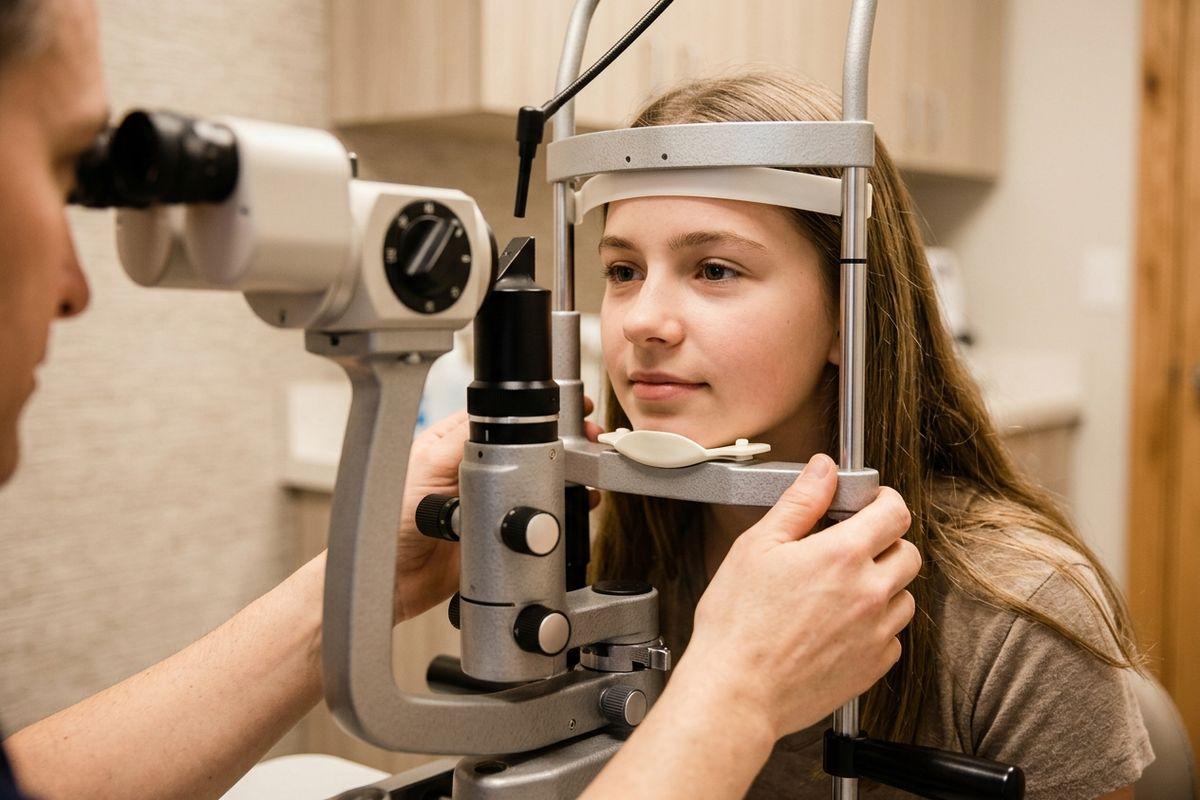
The part most people recognize is the letter chart. That test checks your visual acuity, meaning how clearly you can see at a distance. From there, a refraction test helps your optometrist find the right prescription for glasses or contact lenses. These two steps are quick and straightforward for most patients.
Binocular Vision Tests
Your optometrist will also assess your binocular vision, checking how your eyes work as a team together. Are there muscle restrictions? Are there issues with depth perception and focussing ability?
Eye Health Assessment
Beyond your prescription, your optometrist checks the overall health of your eyes.
Eye pressure is measured to monitor for signs of glaucoma. Retinal imaging with Optomap and/or OCT (ocular coherence tomography) gives our team a detailed look at the back of your eye. If dry eye is a concern, a meibomian gland scan can help identify what may be contributing to your discomfort.
These checks take a little more time, but they give a much fuller picture of your eye health.
What to Know Before and After Your Exam
How to Prepare
A little preparation goes a long way. Bring your current medications and any relevant health history to your appointment. It also helps to write down any symptoms you’ve noticed, even ones that seem minor. Things like occasional blurred vision, burning, or eye fatigue are worth mentioning. If you’re unsure whether certain symptoms point to something like dry eye disease, our team can help you sort that out during your visit.
After Dilation: What to Expect
If your eyes are dilated, your vision may stay blurry and light-sensitive for up to 6 hours afterward. A few simple things can make that stretch more comfortable:
- Bring a pair of sunglasses to wear on the way home.
- Arrange for someone to drive you, since your vision won’t be back to normal right away.
- Screens and reading will likely feel uncomfortable until the dilation wears off.
How Often Your Family Needs an Eye Exam
Recommended Exam Schedule
Staying on a regular schedule is one of the simplest things you can do to protect your family’s vision. Here’s a general guide to follow:
- Children aged 3 to 19 benefit from an eye exam once every year. Infants are assessed typically at 6 months of age, to screen for potential vision issues.
- Adults 20 to 64 should book at least every 2 years.
- Adults 65 and older are recommended to come in once every 12-18 months.
When to Book Sooner
Some signs are worth acting on before your next scheduled visit. Any pain or sudden vision change warrants an immediate visit. Burning, redness, or a gritty feeling in your eyes are signals your eyes need attention. If your vision has been blurry or screens have started to feel uncomfortable, those are good reasons to reach out and book a visit sooner rather than later. You can also take the dry eye questionnaire to get a better sense of what your symptoms may mean before your appointment.
Come See Us
At First Optometry, our team is here to make your eye exam simple, thorough, and worth your time. Whether you’re booking for yourself or the whole family, your optometrist can walk you through exactly what to expect.
Serving patients in St. Thomas, Aylmer, Port Stanley, and the surrounding area, First Optometry makes it easy to take that next step. Reach out today to book your eye exam and get the care your eyes deserve.
