

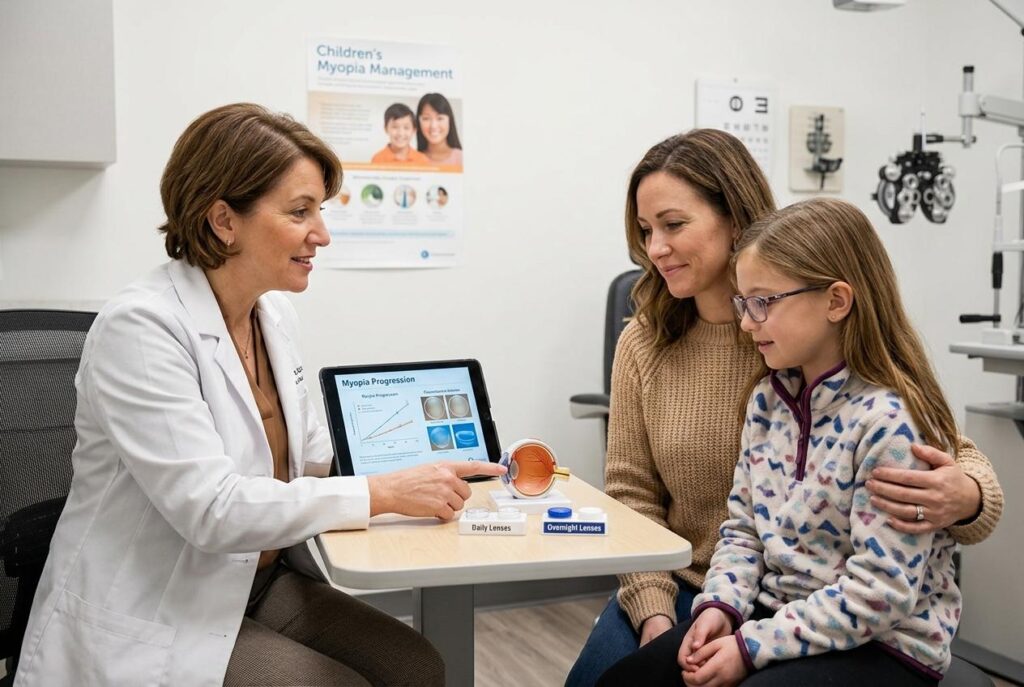
If your child is squinting at the board at school or holding books closer than they used to, myopia, also known as nearsightedness, might be at play. And once it starts, it can continue to progress through childhood. That’s why many parents want to find a proactive way to manage these changes.
MiSight contact lenses are daily disposable lenses designed for children that correct blurry vision while also slowing how quickly myopia progresses. Your optometrist can help you take a closer look at this technology and discover if it’s a good fit for your family.
What MiSight Lenses Actually Do for Your Child’s Eyes
Standard glasses and contact lenses focus light so your child sees clearly. But they don’t address the underlying physical changes happening in the eye as myopia progresses. MiSight is different because it works on both issues at once.
Your child enjoys crisp, clear sight while reading the board or playing outside. At the same time, the lens sends a gentle signal to the eye that discourages it from continuing to grow longer. This dual approach helps protect your child’s long-term eye health.
The Technology Behind MiSight Contact Lenses
MiSight lenses feature a unique design with alternating rings across the surface. Some zones correct distance vision so your child can easily focus on their teacher or track a soccer ball. Other sections act specifically as treatment areas.
These treatment zones refocus light slightly in front of the retina. Doing this helps reduce the signal that encourages the eye to grow longer.
Your child shouldn’t notice the difference between the zones. The lens just sits comfortably on the eye throughout the day like any soft contact lens. Over time, this design may help slow the rate of myopia progression during those crucial growing years.
Is MiSight the Right Choice for Your Child?
Every child has unique vision needs. However, these contacts serve as a reliable starting point for kids with low-to-moderate nearsightedness who feel ready to use contact lenses. Consider MiSight if your child meets the following criteria:
- They’re between the ages of 8 and 12 at the start of treatment.
- They have a low-to-moderate nearsighted prescription.
- They lead an active lifestyle and want more freedom than glasses provide.
The Benefits of Daily Disposables for Busy Families
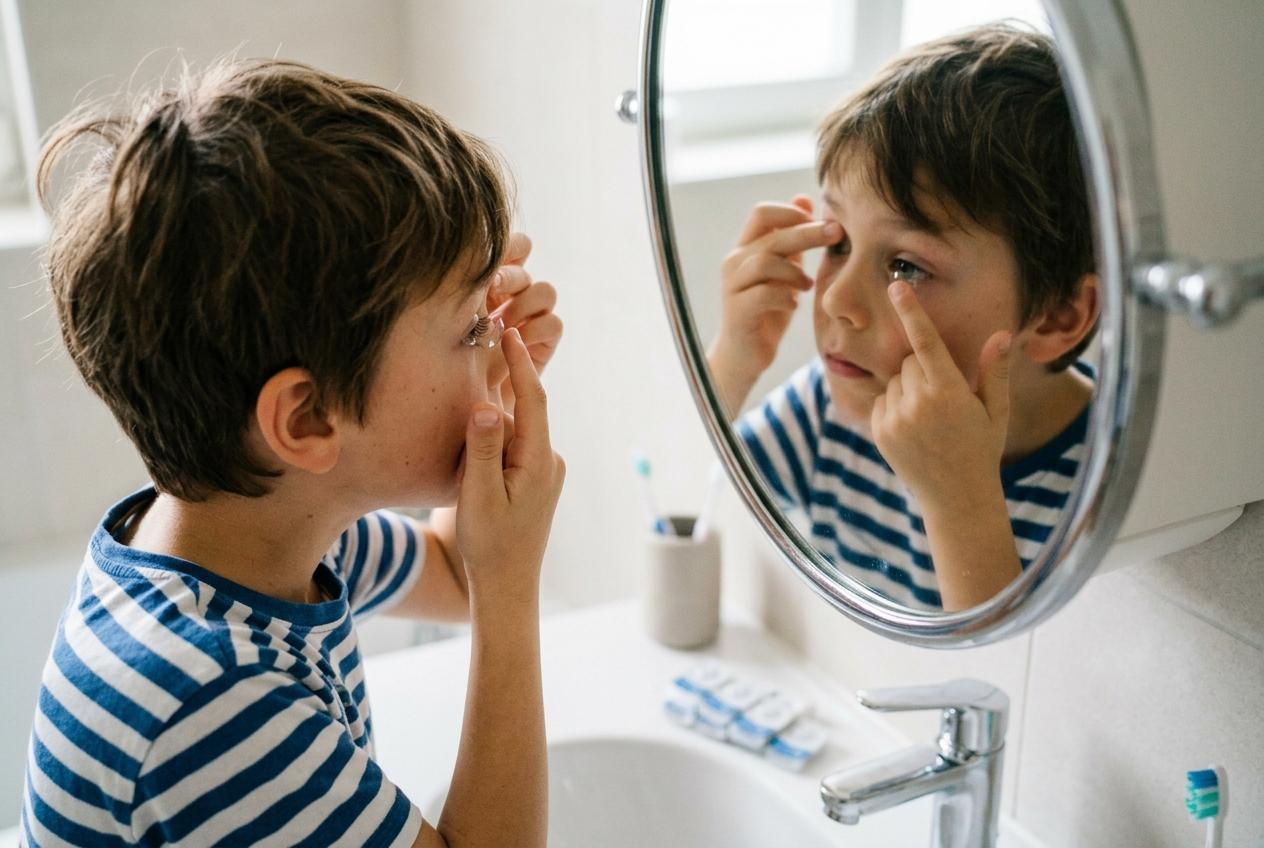
Keeping up with a strict lens cleaning routine can feel overwhelming for kids and parents alike. Daily disposables completely remove that hurdle. Your child simply opens a fresh, sterile pair each morning and throws them away before bed. For busy school mornings, that simplicity matters.
The soft material is easy for young wearers to handle once they learn the basics. Whether they spend their weekends at the hockey rink or just want to navigate the playground without glasses slipping down their nose, these lenses can fit seamlessly into their active lives.
Do MiSight Contacts Really Work?
MiSight has more than 7 years of clinical study data behind it, making it one of the more thoroughly researched myopia management options. The findings indicate that these lenses can effectively slow myopia progression by around 59% compared to standard single-vision contacts.
And the data offers more good news. Researchers have found no evidence of a rebound effect after the treatment period ends. That means your child’s myopia doesn’t appear to worsen once they stop wearing MiSight, offering peace of mind for the future.
What to Expect Over Time
Managing myopia is a marathon, not a sprint. Results from this treatment build gradually over months and years.
Book regular exams with your optometrist to monitor how your child’s eyes respond. As their prescription and lifestyle evolve, your optometrist can adjust the treatment plan to keep everything on track. Constant monitoring helps everyone stay on top of that progress every step of the way.
Other Myopia Treatment Options to Know About
Not every child is ready for contact lenses, and that’s completely okay. Jena Refocus lenses provide a reliable alternative for myopia management. These specialized spectacle lenses look and function just like regular glasses.
Your child can wear them daily without needing to learn any new habits. They are a strong option for younger kids or anyone who simply prefers glasses to contacts. An optometrist can easily compare both options based on your child’s specific needs.
Finding the Right Fit for Your Child
There’s no single answer that works for every child. That’s why a comprehensive eye exam is an excellent starting point. Your child’s age, prescription strength, and daily routine all help shape which treatment option makes the most sense. Whether MiSight, Jena Refocus, or another approach fits best, the right choice starts with the right information.
Schedule an eye exam with First Optometry today to discuss the available options and find a solution that fits your family’s routine.
