
Key Takeaways
- Book a baby’s first eye exam between 6 and 8 months of age.
- Schedule a second exam between ages 3 and 4, then yearly once school begins.
- Kids rarely mention vision trouble, so watch for squinting, rubbing, and sitting close to screens.
- Children who wear contact lenses or glasses or have a family history of eye conditions may need more frequent visits.
- Regular exams with an eye doctor in St. Thomas can catch issues before they affect learning.
Your child comes home from school, squints at the TV, and rubs their eyes before dinner. You wonder if it’s tiredness or something more. Our team at First Optometry knows clear vision touches everything your child does, from reading the whiteboard to catching a ball in the backyard.
Your child should have a first eye exam between 6 and 8 months, a second between ages 3 and 4, and a yearly exam once school starts.
Why Eye Exams Matter for Your Child
Much of what your child learns in the early years comes through their eyes. Reading, writing, and even playing tag all rely on clear sight. When vision falls behind, schoolwork and playtime can feel harder than they should.
Here’s the tricky part. Most kids don’t know their vision isn’t sharp. If blurry words are all they’ve ever seen, they assume everyone sees the same way, so they rarely speak up.
Regular checks with an optometrist in St. Thomas can spot small problems early. Catching a focusing issue earlier in life is far simpler than sorting it out after years of squinting.
How Often Your Child Needs an Eye Exam
Age-by-Age Guide
Babies need their first eye exam between 6 and 8 months. This early visit checks how the eyes move, focus, and work together, long before your child can read a chart.
A second exam fits between ages 3 and 4. Our team can look for issues that affect how your child plays and gets ready for school. Once school starts, a yearly eye exam in St. Thomas helps keep vision on track through every growth spurt.
When More Frequent Visits Help
Some children benefit from more than one visit a year. If your child wears glasses or contact lenses, the eye doctor may want to track changes more closely.
A family history of eye conditions can also mean extra check-ins. When you share your family background, our team can plan a schedule that fits your child.
Signs Your Child May Have Vision Trouble
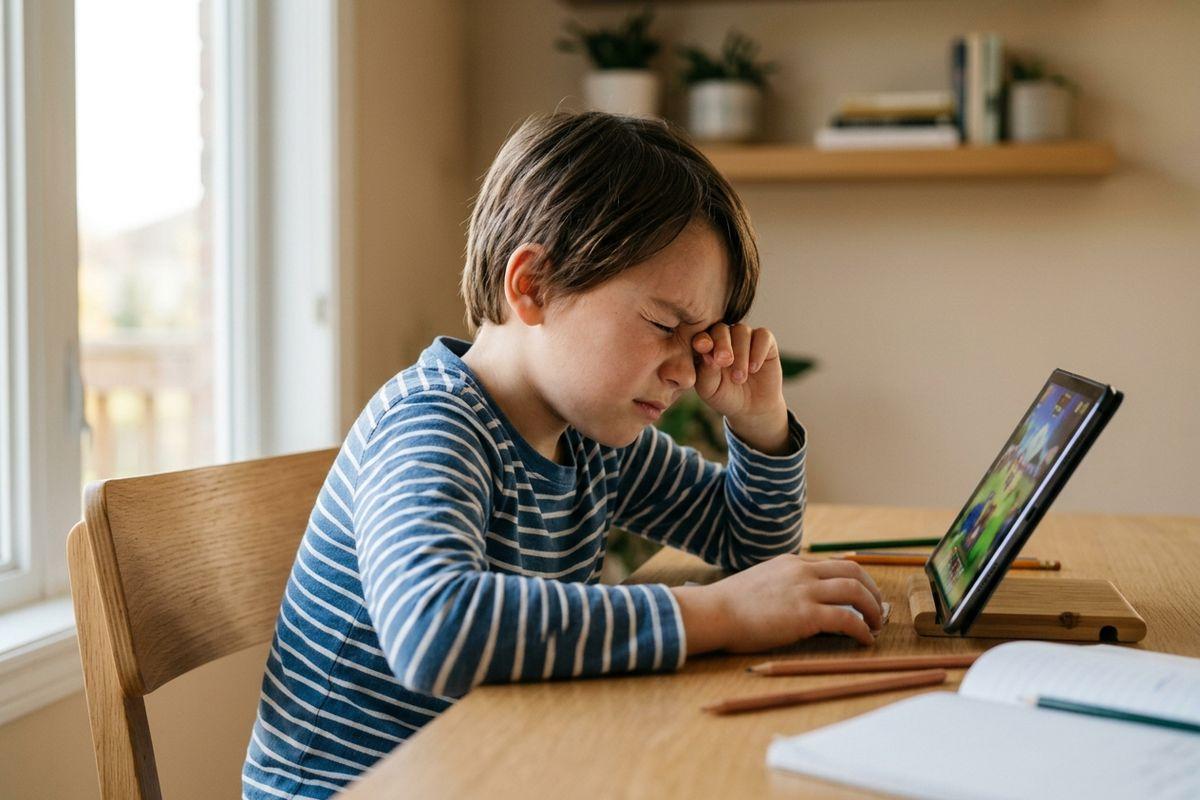
Kids show vision struggles through their actions more than their words. A few habits tend to stand out at home and in the classroom, including:
- Squinting, rubbing the eyes, or tilting the head to see
- Sitting close to the TV, tablet, or a book
- Headaches or trouble focusing on schoolwork
If any of these sound familiar, a visit can help sort out what’s going on.
What Happens During an Eye Exam?
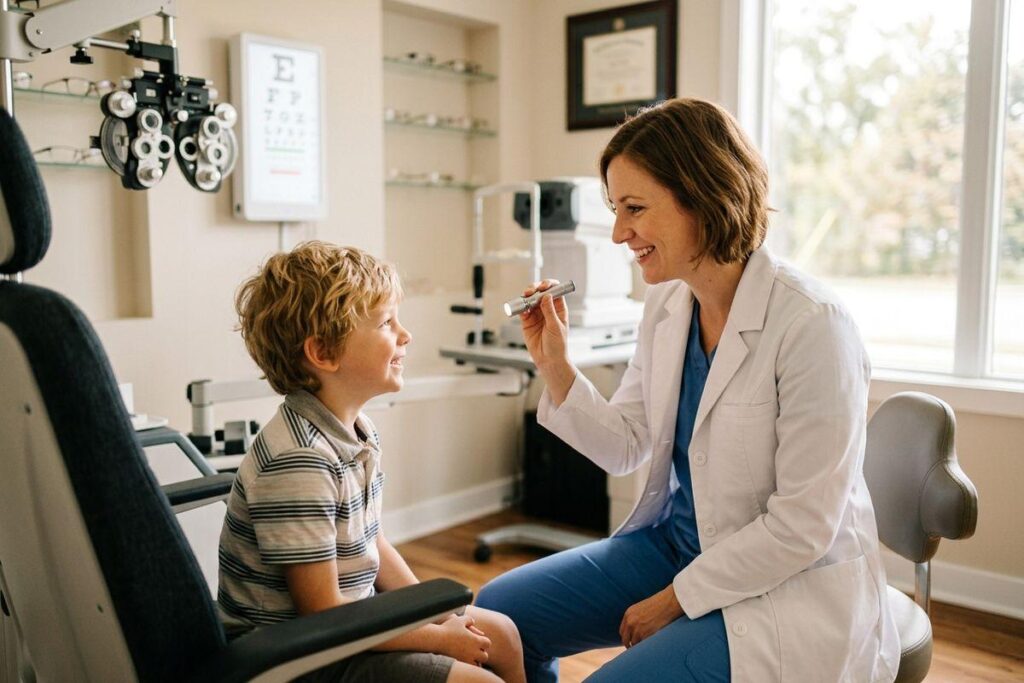
The visit starts with a full check of your child’s vision and eye health. Our team keeps things friendly, so your little one feels at ease from the first minute.
Next comes screening for common concerns like nearsightedness and lazy eye. These checks use gentle tests suited to your child’s age, with no reading required for the youngest patients.
If glasses could help, your family eye doctor tests for the right prescription. You’ll leave knowing exactly where your child’s vision stands and what steps can support it.
Simple Habits to Protect Your Child’s Eyes
The 20-20-20 Rule for Screen Time
Screens fill a big part of your child’s day, from homework to games. A simple habit can give their eyes a rest:
- Take a break every 20 minutes
- Look at something 20 feet away
- Rest the eyes for 20 seconds
Everyday Care at Home
You know your child better than anyone, which makes you the first to notice a change. Keep an eye out for the warning signs and mention them at the next visit.
Stay on schedule with regular exams and follow the eye doctor’s advice between visits. These small steps add up to healthier vision through the school years.
Help Them See the World Clearly
At First Optometry, our team is happy to care for your whole family with warm, thoughtful attention near St. Thomas, Aylmer, and Port Stanley. Book your child’s next eye exam today and give them a clear, comfortable view of the world around them.
