


You open your eyes in the morning, and something just feels off. There’s a burning sensation, maybe a gritty feeling, almost like something’s stuck in your eye that just won’t go away. You blink a few times, hoping it passes, but the discomfort lingers well into brushing your teeth or showering. At First Optometry, our team sees this experience regularly, and it’s one that deserves real answers, not just a quick fix.
Waking up with dry eye may mean your tear film isn’t doing its job overnight, and for many people, it can be a sign that your eyes are asking for a closer look. If you’ve been brushing it off as just a bad night’s sleep, the dry eye therapy options we have available can help you target the factors contributing to your discomfort, not just the symptoms.
What’s Actually Happening to Your Eyes Overnight
Your tear film is a thin layer of moisture that protects and lubricates your eyes throughout the day. When you sleep, blinking stops, and so does the regular refreshing of that moisture layer. Over several hours, the tear film can be disrupted by air, which may find its way into your eye, even while sleeping, leaving your eyes feeling dry and irritated by the time your alarm goes off.
For some people, this is a minor inconvenience that clears up quickly. But if the dryness sticks around or keeps coming back morning after morning, your eyes may be telling you something worth paying attention to.
Common Reasons Your Eyes Feel Dry in the Morning
Your Sleep Environment
The air in your bedroom plays a bigger role than you might expect. Heating systems in winter pull moisture out of the air, and air conditioning in summer can blast wind right at your eyes. If the humidity in your room is low, your eyes can lose moisture faster while you sleep.
This is especially noticeable during colder months in St. Thomas, when indoor heating runs for hours on end. Something as simple as dry bedroom air can leave your eyes feeling rough and uncomfortable each morning.
Sleeping with Eyes Partially Open
Some people sleep with their eyelids slightly open without even realizing it. When the eyelids don’t fully close, the eye’s surface is exposed to air all night, disrupting the tear film or causing it to evaporate much faster than it should.
If you’ve been told you sleep with your eyes open, or if a partner has noticed it, this could be a key reason behind your morning dryness. It’s more common than most people realize, and an eye doctor can help identify and address it.
Allergies and Medications
Your bedding, pillows, and even your pet can carry allergens like dust and dander that irritate your eyes while you sleep. If you wake up with red, watery, or itchy eyes alongside the dryness, allergies may be a contributing factor.
Certain medications, including some allergy and blood pressure medications, can also impact the number of tears your eyes produce. If you’ve recently started a new medication and noticed a change in your morning eye comfort, it’s worth mentioning to your eye doctor.
Signs It’s More Than Just Morning Dryness
Occasional dryness after a poor night’s sleep is one thing. But if any of the following sound familiar, it may be time to look into dry eye therapy:
- A burning, stinging, or gritty feeling that lasts well into the day
- Redness that doesn’t clear up after your eyes adjust to being open
- Blurred vision that lingers after waking
- Symptoms that get worse with screen time or contact lens use
These are signs that your eyes aren’t producing enough, or the right quality of tears, to stay comfortable. Dry eye disease is very common, particularly for those over 40, and there are real, effective options to help manage it. Taking our dry eye questionnaire is an easy first step to find out if treatment may be right for you.
Simple Things You Can Do at Home
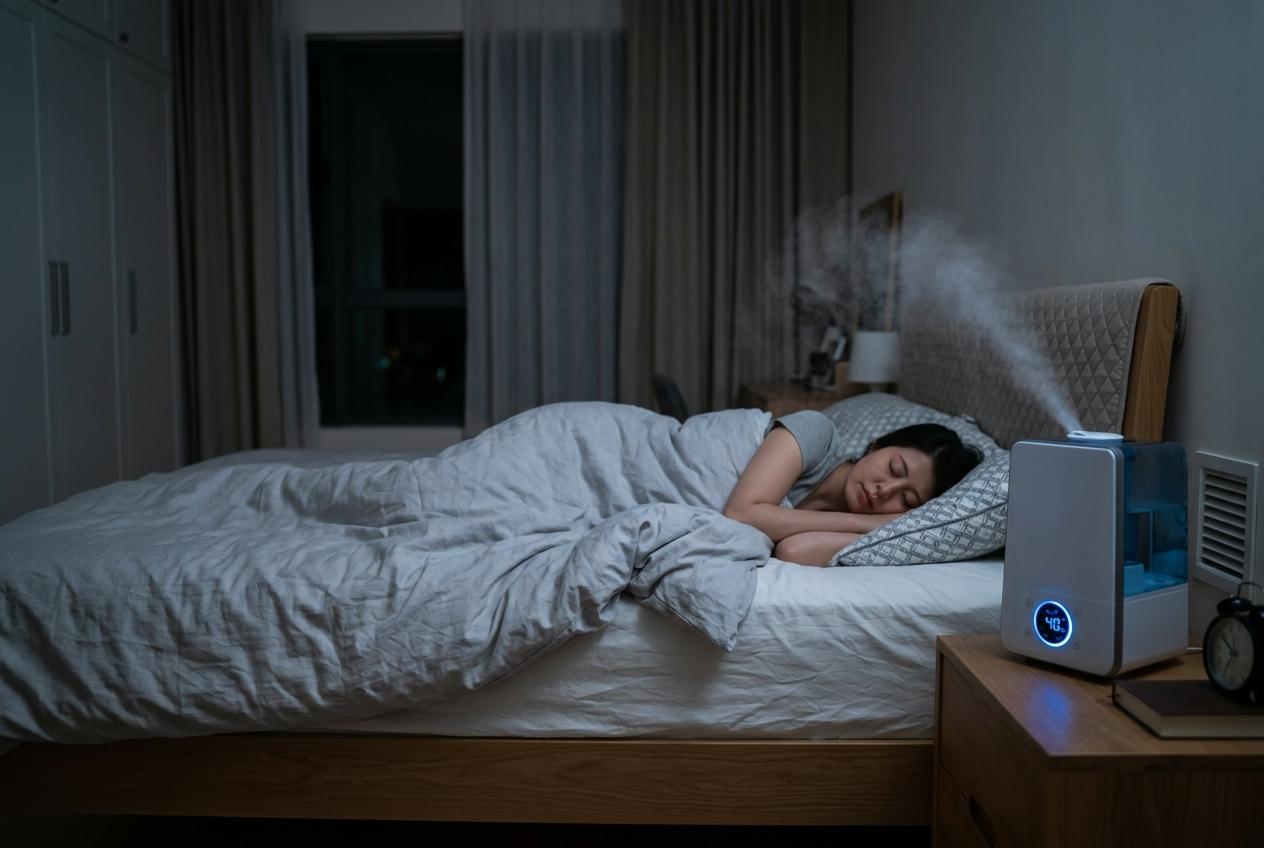
Adjust Your Sleep Environment
Adding a humidifier to your bedroom can make a noticeable difference, especially during dry Ontario winters. During high-allergen seasons, keeping bedroom windows closed can also help limit the irritants your eyes are exposed to while you sleep.
Build a Bedtime Eye Routine
A quick shower before bed can help wash away pollen, dust, and pet dander that collect on your skin and hair throughout the day, before they transfer to your pillow.
Cutting back on screen time before sleep can also help, since screen use strains the eyes and reduces blink rate, leaving them drier heading into the night. If screen-related discomfort is something you deal with regularly, the 20-20-20 rule is a simple habit that can help your eyes recover throughout the day.
When to See an Eye Doctor About Dry Eye
Home habits can offer some relief, but if your mornings still start with uncomfortable eyes, it’s worth getting a proper assessment. At First Optometry in St. Thomas, our team begins with a thorough dry eye assessment to find the root cause of your symptoms: Not just manage them on the surface.
From there, our personalized treatment options go well beyond over-the-counter eye drops. There are proven therapies, including Lipiflow, IPL and radiofrequency treatments, that target the underlying causes of your dry eye symptoms to provide you with longer-lasting relief.
Book Your Dry Eye Assessment
Ready to find out what’s behind your dry eye? Our team at First Optometry is here to help you find relief and improve your day-to-day comfort. Book your dry eye assessment with an optometrist in St. Thomas today.
